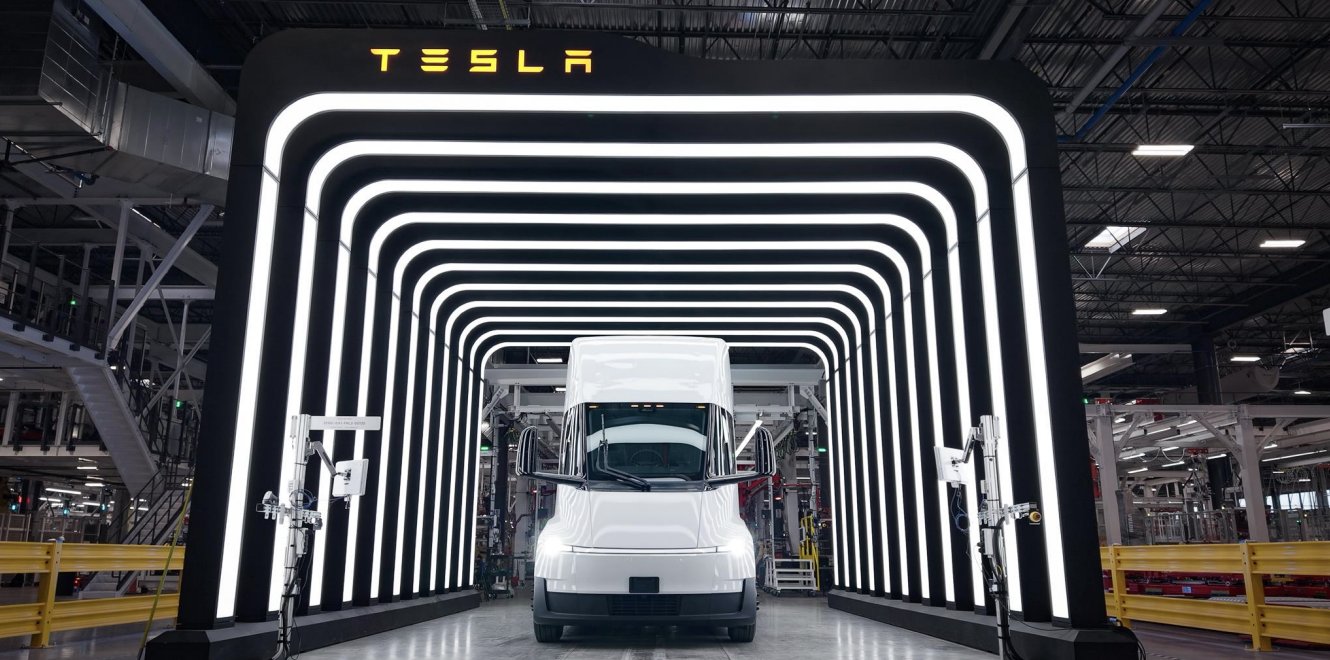
Tesla Aims for 'Zero Human Touch' on Nevada Semi Line

Tesla executives say the new Nevada Semi factory is built for a 'zero human touch' process, from Texas-made battery cells to a finished truck, at up to 50,000 trucks a year.

3 min read
Tesla Aims for 'Zero Human Touch' on Nevada Semi Line

SPARKS, Nev. — Tesla is chasing a manufacturing goal that sounds almost like science fiction: building its electric Semi with "zero human touch" from the moment battery cells arrive from Texas to the point a finished truck rolls off the line. Company engineers describe the fully automated flow as the guiding principle behind Tesla's new 1.8-million-square-foot Semi factory here, a plant designed to turn out as many as 50,000 heavy trucks a year.

The facility, which sits next to Gigafactory Nevada and ramped into high-volume production in April, is Tesla's most aggressive attempt yet to stretch its "the best part is no part" philosophy across an entire assembly line. Tesla's recent Semi hardware upgrades hinted at the ambition; the production story shows how far the automation now reaches.

From a Texas Trailer to the Nevada Line

The key to the concept is the battery. Tesla builds its 4680 cells in-house at Giga Texas, then ships them to Nevada, where an automated unloading system pulls the cells straight from the trailer and feeds them into pack and vehicle assembly without an operator in the loop. The company says the line uses the highest-capacity electric monorail conveyance in vehicle manufacturing, and it swaps conventional paint for a more efficient powder-coating step.

"Zero human touch point," is how vehicle engineering chief Lars Moravy and Semi program head Dan Priestley have framed the target — a hands-off path that runs from the arriving Texas trailer all the way to a completed truck.

Tesla Aims for 'Zero Human Touch' on Nevada Semi Line — additional image

Sharing DNA With Cybertruck

Part of what makes the automation feasible is design discipline. The Semi shares a bar-wound stator and other components with Cybertruck, letting Tesla reuse tooling and simplify the parts list. Fewer unique pieces mean fewer stations, fewer chances for error, and a line that is far easier to fully automate — the same logic Tesla has applied as it ramps Optimus toward 1,000 robots a week.

That component-sharing strategy is central to Tesla's cost math. Every stator, casting or wiring harness that can be borrowed from an existing vehicle is one the Semi team does not have to design, validate and build from scratch.

Customers and the Road Ahead

Early Semi customers include PepsiCo, DHL and U.S. Foods, fleets that have been folding the electric trucks into real-world routes. As Teslarati detailed in its look at the production approach, the automation is meant not just to raise output but to drive down the per-truck cost that has long made heavy electric trucking a tough business case.

If Tesla can hold quality while pushing toward its 50,000-unit annual target, the Nevada plant could become a template for how the company builds its next generation of vehicles — proof that a nearly untouched-by-hand assembly line is no longer just a slogan.

Stay Up to Date on All Things Elon

Get the most interesting Elon Musk stories straight to your inbox, once a day. Short, interesting and relevant!