NHTSA Cuts Red Tape to Speed Driverless Car Deployment

The Trump administration rolled out a package of NHTSA reforms to speed autonomous-vehicle deployment, a regulatory tailwind that stands to benefit Tesla's robotaxi ambitions.

3 min read
NHTSA Cuts Red Tape to Speed Driverless Car Deployment

AUSTIN, Texas — Federal regulators moved on July 30 to clear away years of accumulated red tape around self-driving cars, unveiling a package of reforms designed to accelerate the commercial deployment of autonomous vehicles in the United States, a shift that stands to benefit Tesla's fast-growing robotaxi program.

The changes, announced by the National Highway Traffic Safety Administration under Transportation Secretary Sean Duffy, aim to replace a patchwork of state rules with a single, coherent national framework, and to make it far easier for companies to put driverless vehicles on public roads. For Tesla, which has been scaling its unsupervised robotaxi fleet aggressively, the timing could hardly be better.

Five Moves to Open the Road

The centerpiece is a set of five actions. NHTSA granted a temporary two-year exemption allowing one operator to commercially deploy up to 2,500 vehicles a year under an adaptable oversight structure, and it opened the door to additional exemptions for other developers. The agency also launched a three-year, $5 million consortium with SAE Industry Technologies to develop the first-ever national AV performance standards.

Rounding out the package, NHTSA published an interim rule letting vehicles built before an exemption qualify for commercial deployment, streamlined its Part 555 exemption process, and opened a new federal docket to update AV safety guidance for the first time since 2017. Together the moves modernize a rulebook that industry leaders have long argued was written for a world before autonomy existed.
NHTSA Cuts Red Tape to Speed Driverless Car Deployment — additional image

Why It Matters for Tesla

Tesla's vision-only approach to full autonomy has always faced a regulatory gate as much as a technical one. The company's internal safety data has shown its self-driving vehicles outperforming average human drivers, and it has logged hundreds of thousands of unsupervised miles without incident. What has slowed broader rollout is the thicket of differing state rules and an exemption process that moved at a glacial pace.

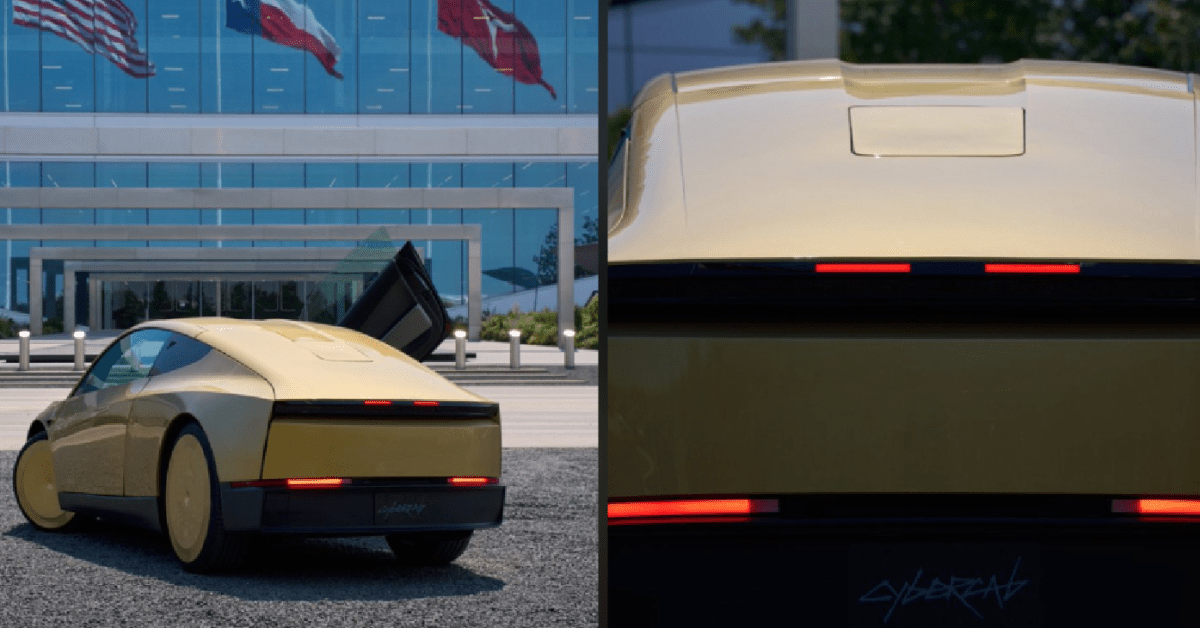
A single national standard, faster exemptions, and updated federal guidance directly address those bottlenecks. As NHTSA modernizes standards covering everything from mirrors and controls to crash reporting, purpose-built vehicles like Tesla's Cybercab, which ships without a steering wheel or pedals, gain a clearer path to mass deployment.

A Global Race

Officials framed the reforms as a matter of national competitiveness, warning that without decisive U.S. leadership, foreign competitors backed by heavy state support could set the world's AV safety standards instead. The full details were laid out in the administration's deregulation announcement, which emphasized eliminating the state-by-state patchwork that has stifled innovation.

For an American industry that has spent years waiting on Washington, the message was unambiguous: the federal government wants driverless cars scaling on U.S. roads, and it is willing to rewrite the rulebook to make it happen. That is a powerful tailwind for Tesla as it pushes its robotaxi network toward nationwide expansion in the months ahead.